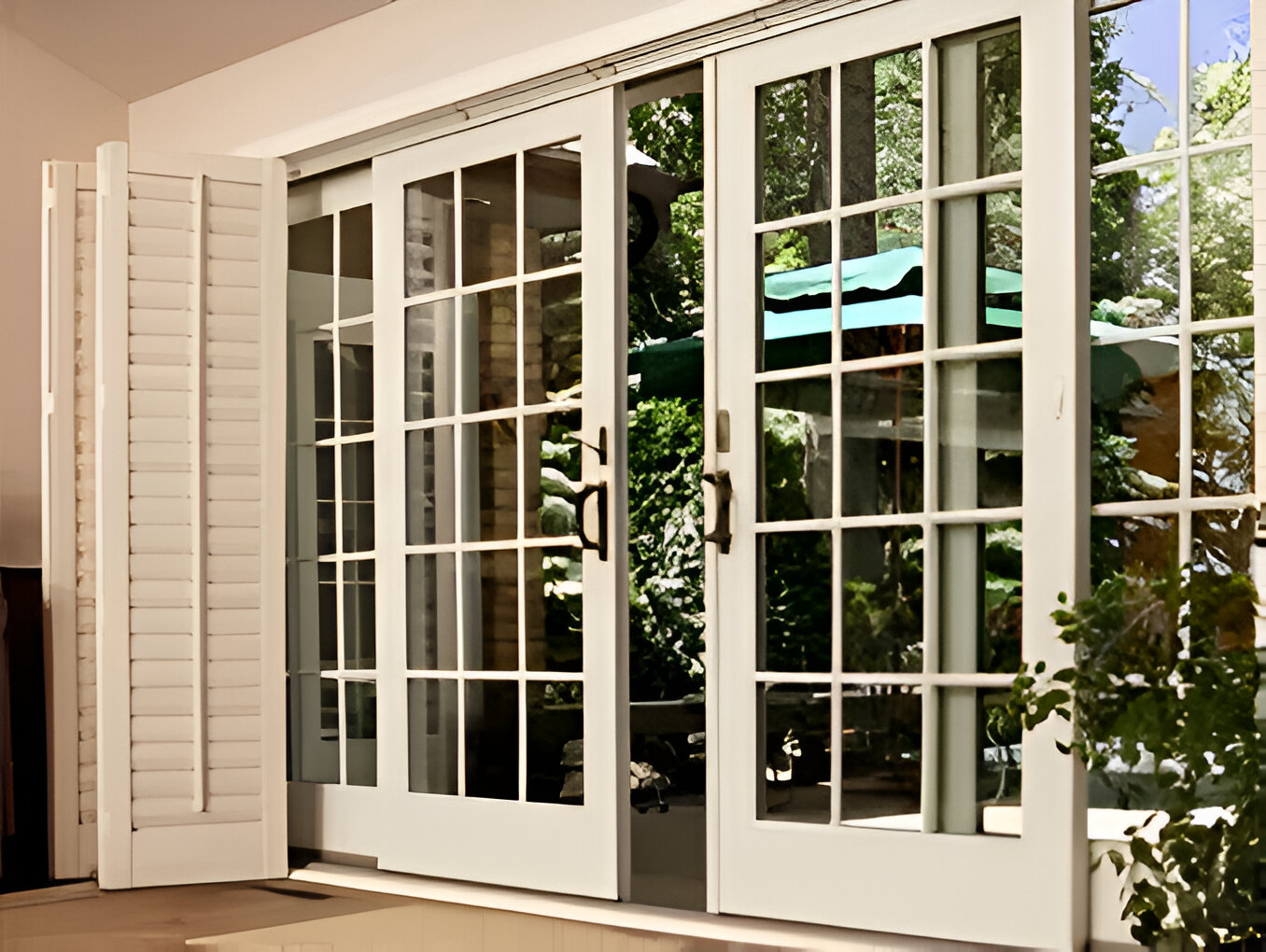
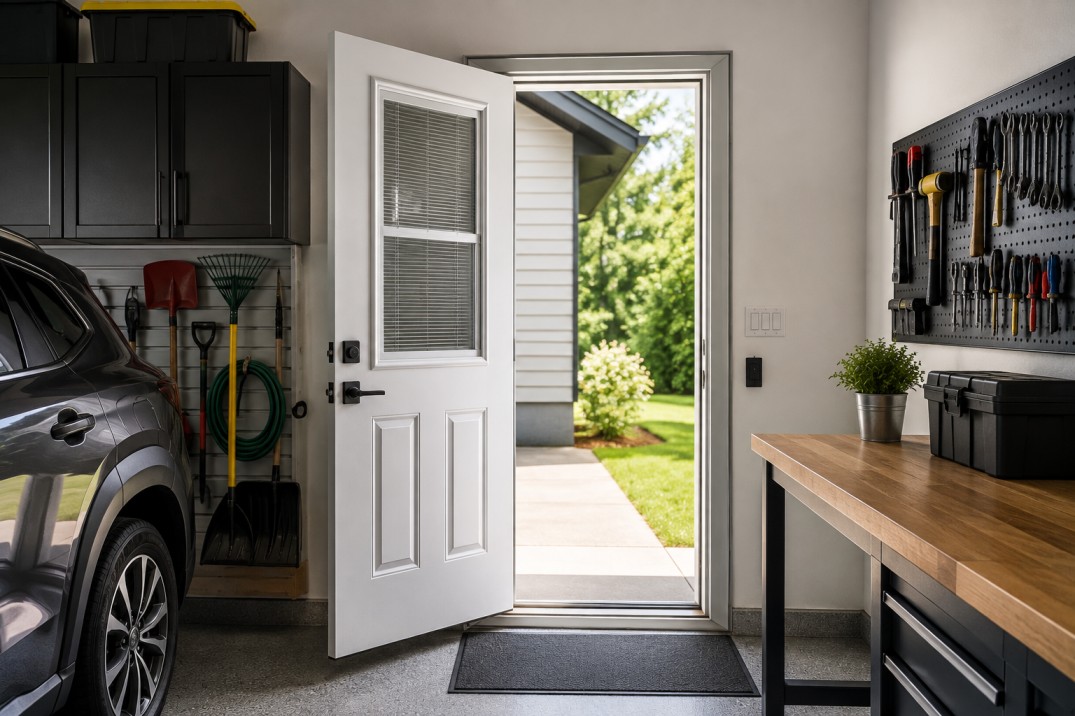
If you use your attached garage for anything beyond parking, a workshop, a gym setup, paint projects, or just storage, you have probably noticed how stale and closed off the air in there can get. Most attached garages in Ottawa have exactly one way in or out for people: a single side door, and it is usually a solid, sealed unit with no airflow of its own. A venting side door changes that. It looks and functions like a normal exterior door, but it includes a small hinged or sliding vent panel that lets fresh air in and stale air out without opening the whole door or the big garage door. This guide explains what a venting side door actually is, why more Ottawa and Gatineau homeowners are installing them on attached garages, and one important safety distinction that gets missed in most articles on this topic.
Key Takeaways
- A venting side door is a standard exterior door with a built in vent panel that opens for airflow without opening the full door.
- Attached garages often have no dedicated airflow path, which lets fumes, humidity, and heat build up when the space is used for more than parking.
- A venting side door belongs on the garage’s exterior wall, leading outside, not on the interior door between the garage and the house.
- The door between an attached garage and the house has its own fire separation requirements under the Ontario Building Code and should not be replaced with a vented style.
- Health Canada recommends keeping the garage-to-house door closed and not idling vehicles in the garage, even with the big door open, which is exactly why a separate exterior venting path matters.
What Is a Venting Side Door
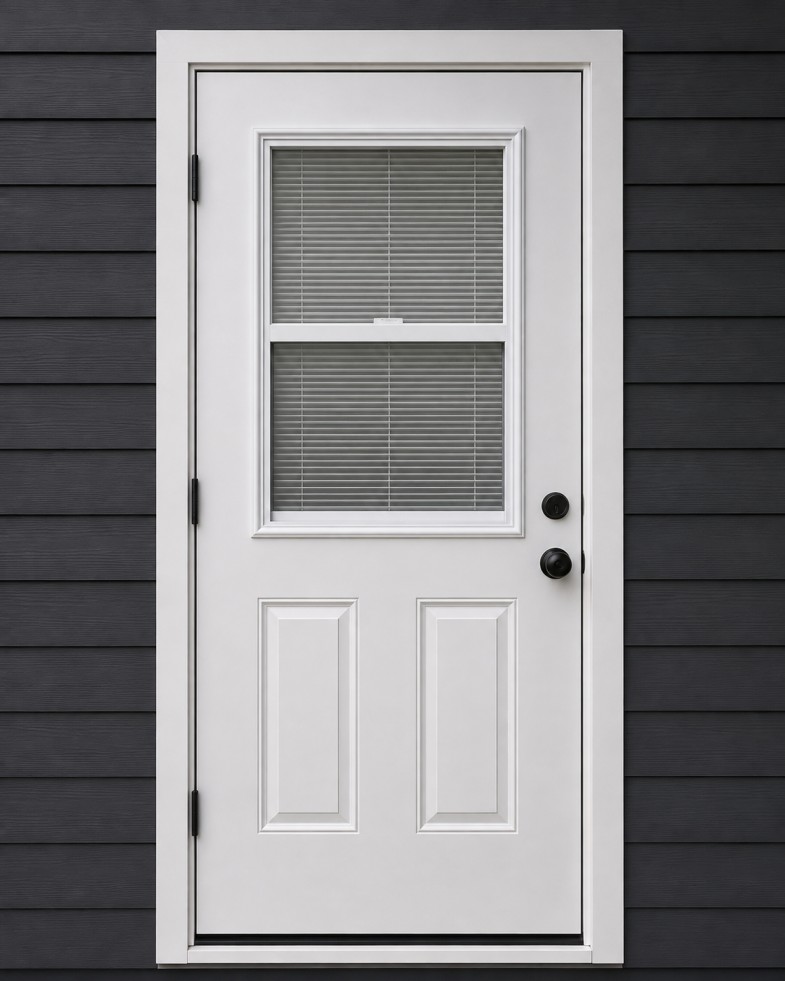
A venting side door is built like any other exterior side door, but a section of the door includes a screened vent that can be opened independently of the main door panel. Our venting side door service shows the styles available, including options built with a full perimeter compression weather strip so the seal stays tight when the vent is closed. The idea is simple: instead of opening the whole door and losing your heating or cooling, or leaving the big garage door up, you get a small, controlled opening that lets air move through the space.
Homeowners in older Ottawa and Gatineau neighbourhoods run into this problem more than most, since a lot of those attached garages were built decades before anyone thought to plan for airflow. Our installers hear the same complaint on almost every one of these visits: the garage traps smells and heat with nowhere for either to go.
Why Attached Garages Need Their Own Ventilation Path
Attached garages are usually the most sealed off room in a home, ironically. There is no bathroom fan, no range hood, and often no window that opens. Anything that produces fumes, gas equipment, paint, solvents, a car that just pulled in on a cold day, has nowhere to go except to slowly dissipate or seep into the rest of the house through the shared wall and door. A dedicated airflow path lets that air actually exchange with the outside instead of sitting in the garage or finding its way indoors.
The Difference Between a Venting Side Door and the Door Into Your House
This is the part most articles on venting doors skip entirely, and it matters. A venting side door is meant for the wall of the garage that leads outside, not the interior door that connects the garage to your house. The door between an attached garage and the living space has its own fire separation requirements under the Ontario Building Code, and it needs to stay a solid, tight fitting, self closing door, not a vented one. Health Canada’s guidance on carbon monoxide exposure specifically recommends avoiding idling cars or other gas-burning equipment inside an attached garage, and keeping the door between the garage and living space closed. A venting side door on the garage’s exterior wall actually supports that advice, since it gives fumes a path outside instead of relying on the interior door or an open garage door for air exchange.
How a Venting Side Door Helps Garage Airflow
Once air actually has a path in and out of the garage, the benefits show up in a few practical ways. The two that matter most to homeowners are how quickly the space clears out after use, and how easy it is to get that airflow without giving up the temperature control you have worked to maintain inside.
Reduces Trapped Fumes and Humidity
A garage with no airflow holds onto exhaust residue, gas fumes, and moisture from wet vehicles or de-icing salt far longer than one with even a small, controlled vent path. Over time, trapped humidity in an unventilated garage can also contribute to condensation on garage windows and nearby surfaces, similar to what we cover in our window condensation guide.
Keeps the Garage Usable Without Opening the Big Door
Opening the main garage door for airflow means losing whatever heat or cooling you have built up inside, and it is not practical to leave it up while you are working in there on a cold day. A venting side door gives you a middle option, real airflow without losing the whole space to outdoor temperatures.
Common Reasons Ottawa Homeowners Are Adding Them Now
We are seeing more requests for venting side doors tied to how garages get used today. Home gyms set up in the garage need airflow that a sealed space cannot provide on its own. Weekend workshop and hobby use, woodworking, small engine repair, and similar projects benefit from a controlled fresh air path rather than propping the big door open. Homeowners storing paint, solvents, or seasonal equipment also want a way to keep the space from turning stale between uses. It is a request our team fields on both sides of the river, from Ottawa’s older suburbs through to Gatineau homes with a similar garage layout.
What to Look for in a Venting Side Door
Not all venting doors are built the same. When comparing options, look for a full perimeter compression weather strip so the seal holds when the vent is closed, a vent panel that locks securely when closed for security, and a frame material that matches the durability of the rest of your exterior doors. Our full range of exterior doors covers materials and finishes if you are planning to match the venting side door to an existing entry style.
Choosing the Right Ottawa Installer for This Kind of Door
Installing a venting side door on an attached garage is straightforward for an experienced installer, but placement matters, and it should never be installed as a replacement for the fire rated door between your garage and house. When comparing quotes, ask:
- Where do they recommend placing the venting side door for the best airflow in your specific garage layout?
- Can they confirm the interior garage-to-house door still meets fire separation requirements if you are renovating at the same time?
- What warranty covers the vent hardware separately from the door itself?
Pete has walked more than a few Ottawa and Gatineau homeowners through exactly this placement question, and it is usually the first thing worth checking before ordering a door. If you are not sure whether a venting side door makes sense for your garage setup, contact our team and we can walk through the layout with you.
Ready to Improve Your Attached Garage’s Airflow?
If your attached garage feels stuffy, holds onto fumes, or just does not get any airflow between uses, a venting side door is a simple upgrade that solves it without compromising the fire separation between your garage and your home. Capitall Windows and Doors has installed doors for Ottawa and Gatineau homeowners for years, and every quote includes an honest look at what actually fits your garage layout.
Get a free, no obligation quote or call us to speak with our team directly.
Frequently Asked Questions
Can I install a venting side door between my garage and house?
No, the door between an attached garage and the house needs to meet fire separation requirements under the Ontario Building Code and should remain a solid, self closing door. A venting side door belongs on the garage’s exterior wall, leading outside.
Does a venting side door help with carbon monoxide in an attached garage?
It supports better air exchange between the garage and the outside, which is a helpful part of a safe setup. It does not replace basic carbon monoxide safety steps, such as never idling a vehicle in the garage and keeping a working carbon monoxide alarm installed near the garage entry.
How much does a venting side door cost in Ottawa?
Pricing depends on the door material, size, and the specific venting hardware chosen. It is generally comparable to a standard exterior side door with an upgrade for the vent mechanism. Request a free quote for exact pricing on your project.
Will a venting side door affect my garage’s heating or cooling?
When closed, a quality venting side door with a full perimeter weather strip seals as well as a standard exterior door. The vent is meant to be opened only when you want airflow, not left open, so it should not add ongoing heat loss when closed properly.
Can a venting side door be added to an existing garage without major renovation?
In most cases, yes, if there is already an exterior side door opening on the garage that can be replaced with a venting model. If you are creating a new opening where one does not exist, that typically requires cutting the wall and may need a permit, so it is worth confirming the scope with an installer first.