Recommended Articles
What Is a Venting Side Door? Why Ottawa Homeowners with Attached Garages Are Installing Them
0% Financing Available – Start Your Project Today find out more
The storm door benefits most homeowners hear about are fewer drafts in winter and fresh air in summer, and both are real. But a storm door does both more and less than the brochures suggest. It is a second door mounted in front of your entry door, so it takes the first hit from wind-driven snow, freezing rain and summer sun, and whether that helps or hurts depends on the condition of your entry door and which way it faces. At Capitall Windows, we install doors across Ottawa and Gatineau, and this guide walks through what a storm door actually does in each season, where it falls short, and how to tell whether it is the right move for your entrance.
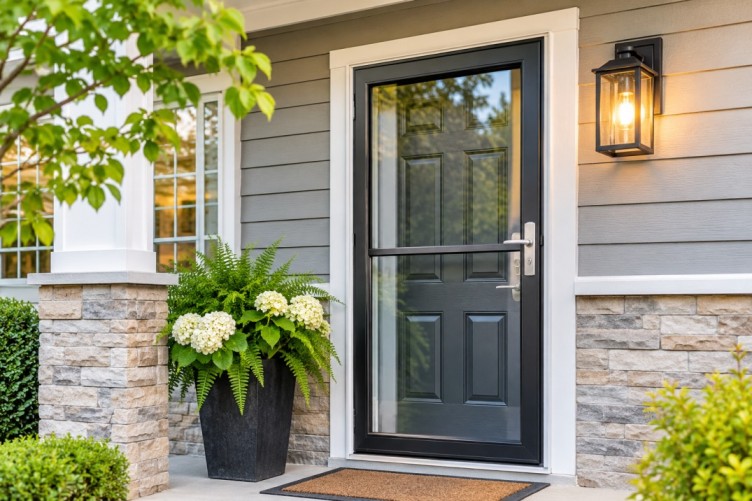
A storm door is an additional exterior door that mounts on the frame in front of your main entry door. Together, the two doors trap a layer of still air between them, and the outer door acts as a windbreak, a rain shield and, with a screen panel, a way to let air in without letting insects in. Capitall Windows installs storm doors in a wide range of finishes, so the choice is as much about style as it is about performance.
It helps to separate a storm door from a plain screen door. A screen door only keeps bugs out, and it does nothing in January. A storm door pairs a glass panel for the cold months with a screen panel or retractable screen for the warm ones, so the same door works across the seasons. How easily those panels swap or retract depends on the model.
Full-view storm doors use a large glass panel that lets in daylight and shows off the entry door behind it. Many include a screen panel you swap in for summer, while others have a screen that retracts into the frame so you can switch between glass and screen without removing anything. Which type suits you depends on how you use the entrance.
| Type | Best for | Watch for |
|---|---|---|
| Full-view with swap-out panels | Maximum light and a clear view of the entry door | Panels need storing, and a glass panel left in during summer heat can trap warmth |
| Retractable screen | Switching between glass and screen quickly as the weather changes | Tracks and moving parts need to be kept clear of ice and debris |
| Ventilating design | Airflow while the glass stays in place | Vent and seal details vary by model, so ask what is included |
Winter is where the benefits of a storm door are easiest to see and easiest to overestimate. Here is what one realistically does for an Ottawa entrance between November and March.
Wind does much of the damage at a front door. It pushes cold air against the seals around your entry door, and the harder it blows, the more air finds a way in. A storm door sits in front of that door and breaks the wind before it reaches the seals, which reduces the pressure on them. That can make the entrance feel calmer on a blustery day.
What it cannot do is repair a door that does not seal. If you feel air moving around the frame or under the door with the storm door closed, the problem is the entry door’s seals, fit or installation, and the fix belongs there, not in a second door.
A storm door adds a layer of still air between two doors, and that layer slows heat loss a little. How much it helps depends on what you already have. A storm door usually makes the biggest difference on an older, leaky or thinly insulated entry door, and the smallest on a modern insulated one. Savings vary widely from home to home, so treat any specific percentage you see online with caution and look at the condition of your current door before you expect a change on your heating bill.
Moisture is the other thing to know. In a deep freeze, condensation can form on storm door glass when warm air from the entry reaches the cold outer pane. That is usually just physics rather than a defect, and a quick wipe is normally all it needs.
Ottawa winters mean snow packed against the door, ice on the threshold and the occasional freezing rain that glazes everything it touches. The storm door takes that exposure first, which helps keep ice off the entry door’s finish, handle and lock. Keep the storm door’s tracks, hinges and closer clear of ice so it keeps closing properly, and clear snow away before opening it so the closer is not forced.
Not sure whether your entry door needs a storm door or something more? Request a free assessment and we’ll look at the door, the frame and the exposure before recommending anything.
The shoulder seasons are hard on an entrance in a different way. Wind-driven rain, wet leaves and big temperature swings test the finish and hardware, and mild days make you want the door open.
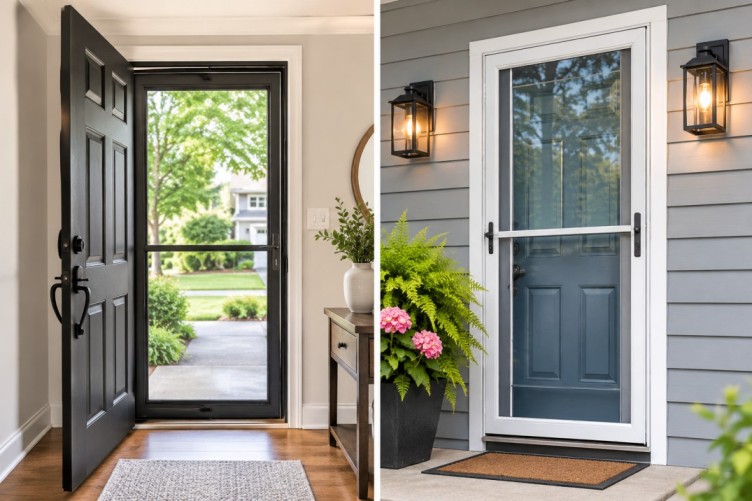
A storm door keeps rain off the entry door and lets you leave the main door open for light and air while the outer door stays closed against the weather. On a mild day with the screen in, you get a breeze and a view without bugs or leaves blowing into the hallway. It also gives wind-blown rain somewhere to land other than your front door’s seals and finish.
Paint, stain and other finishes take a beating from repeated wetting and sun, and a storm door shelters the entry door from some of it. That can slow wear on the finish, but it is not a guarantee of a longer-lasting door, and it comes with a caveat covered in the summer section: a glass storm door can also trap heat and moisture against the entry door if the setup is wrong. Wood and painted doors are the most affected by moisture and sun, so they are where the shelter matters most, and where ventilation matters most too.
Summer flips the storm door’s job. Instead of keeping the cold out, it is about airflow, and about managing the heat that glass can create.
With a screen panel or a retracted screen, a storm door lets air flow through the entrance while insects stay out. That is useful for cross-breezes, for letting kids and pets come and go, and for cooling a hallway in the evening. If airflow is your main goal, a venting side door builds ventilation into the door itself instead of adding a second door, which can be a cleaner solution at a side or back entry.
This is the part most storm door pages skip. Glass traps heat, and low-E coated glass can reflect heat back toward the entry door. On an entrance that gets strong direct sun, the space between the two doors can get hot enough to stress the entry door’s finish or cause it to warp, and entry door manufacturers commonly address this in their guidance on storm doors. Whether it happens depends on how much sun the entrance gets, the type of glass, the colour and material of the entry door, and how well the setup is ventilated.
If your entrance faces south or west, check the entry door manufacturer’s instructions before choosing a glass storm door. A ventilated or screen-based design, tinted glass, shade from an overhang or awning, or simply leaving the screen in through summer can all reduce the risk. When the setup does not suit the entrance, skipping the storm door can be the better answer.
A storm door adds one more barrier between the street and your entry door, and a lockable handle plus a solid frame can discourage casual attempts. It is not a substitute for a strong entry door, a good deadbolt and a sound frame, which still do the heavy lifting on security. When you compare models, look at the frame’s strength, the hinges, the closer and the lock, and ask about the glass. Tempered glass is the usual standard because it is designed to break into small pieces rather than sharp shards.
A storm door is part of your home’s face, so the finish matters. Choose a colour that complements the entry door, the trim and any other exterior doors, and consider a full-view design if you want to keep an attractive entry door visible. If your home also has a patio door, keeping the finishes consistent makes the exterior look planned rather than patched together.
For many Ottawa homes a storm door is worth it, but not for every entrance. It earns its place when the entry door is sound and the entrance takes a beating from wind, snow or rain. It is a weaker choice when the entry door itself is the problem. Judging which case you are in is where technical expertise from our team, particularly Pete Crete, our Sales Manager, who brings roughly three decades of hands-on window and door installation experience, together with our Ottawa and Gatineau experience, comes in.
| Your entrance | A storm door is likely to… |
|---|---|
| Sound entry door with windy or snowy exposure | Help by breaking the wind and shielding the door |
| Older, leaky entry door that still works | Help somewhat, though replacing the door may do more |
| Strong direct sun on a dark or wood door | Need care, because heat can build up between the doors |
| Warped, damaged or failing entry door | Cover up the problem rather than solve it |
A storm door tends to make the most sense when the entry door is in good shape and you want to protect it, when the entrance faces the prevailing wind or collects drifting snow, when the entrance gets limited direct sun, and when you value a screened breeze in summer. It is also a practical way to shelter a good-looking wood or painted door that you do not want to replace.
If the entry door is warped, damaged, drafty around the frame or cold to the touch, adding a storm door hides the problem instead of fixing it. A new insulated door addresses the slab, the frame and the seals together, and the details of how foam core insulation and Energy Star labels translate into real comfort are worth understanding before you compare options. If replacement is the right call, a new front door can be fitted with the same attention to the frame and seals. Some homeowners do both, pairing a new insulated door with a storm door for shelter and ventilation, as long as the entrance’s sun exposure suits it.
Weighing a storm door against a new entry door? Get a free estimate and compare both options on the same page.
A storm door looks simple to hang, but the details decide whether it works for years. The frame has to be square and plumb, the hinge side needs solid fastening, the closer needs adjusting so the door shuts firmly without slamming, the sweep and seals have to meet the threshold, and the swing must clear the entry door, the railing and the steps. A door that is slightly out of square drags, whistles or never latches, and a closer set too tight or too loose either punishes fingers or lets the wind take the door.
Technical expertise from our team, particularly Alex Ganea, our Installation Manager, who oversees our installations and quality control, is what keeps those details right, backed by our Ottawa and Gatineau experience across entrances of every age and style. Our team also works in both English and French, so you can ask your questions in whichever language is easier.
Questions worth asking any installer before you commit:
Request your free storm door estimate or call 613-680-0492 (Ottawa) or 819-441-7530 (Gatineau) and tell us which way your entrance faces.
The real storm door benefits come from three things: sheltering the entry door from Ottawa’s weather, adding a buffer against wind-driven drafts, and giving you screened airflow when the weather turns mild. They depend on the condition of your entry door and the sun your entrance gets. Check both before you decide, and if the entry door itself is the weak link, fix that first.
It can if heat builds up between the two doors, which is most likely on a sun-facing entrance with a glass storm door. Check the entry door manufacturer’s guidance, choose a ventilated or screen-based option where needed, and have the storm door installed correctly so it does not rub or bind.
They can, mostly by reducing wind-driven air at the entry door and adding a layer of still air. The benefit is usually larger for an older or leaky entry door and smaller for a modern insulated one, so savings vary from home to home.
Many are designed to stay up year-round, with a glass panel in cold months and a screen in warm ones. Follow the manufacturer’s guidance for your model, and pay attention to sun exposure and heat buildup in summer.
It depends on the materials, the finish, the hardware, how exposed the entrance is and how well it is maintained. Keeping the tracks, hinges and closer clean and adjusted helps it last.
Not always. The frame, trim, swing direction and clearance around the entrance all affect whether a storm door will fit and operate properly, which is why measuring the opening comes first.