
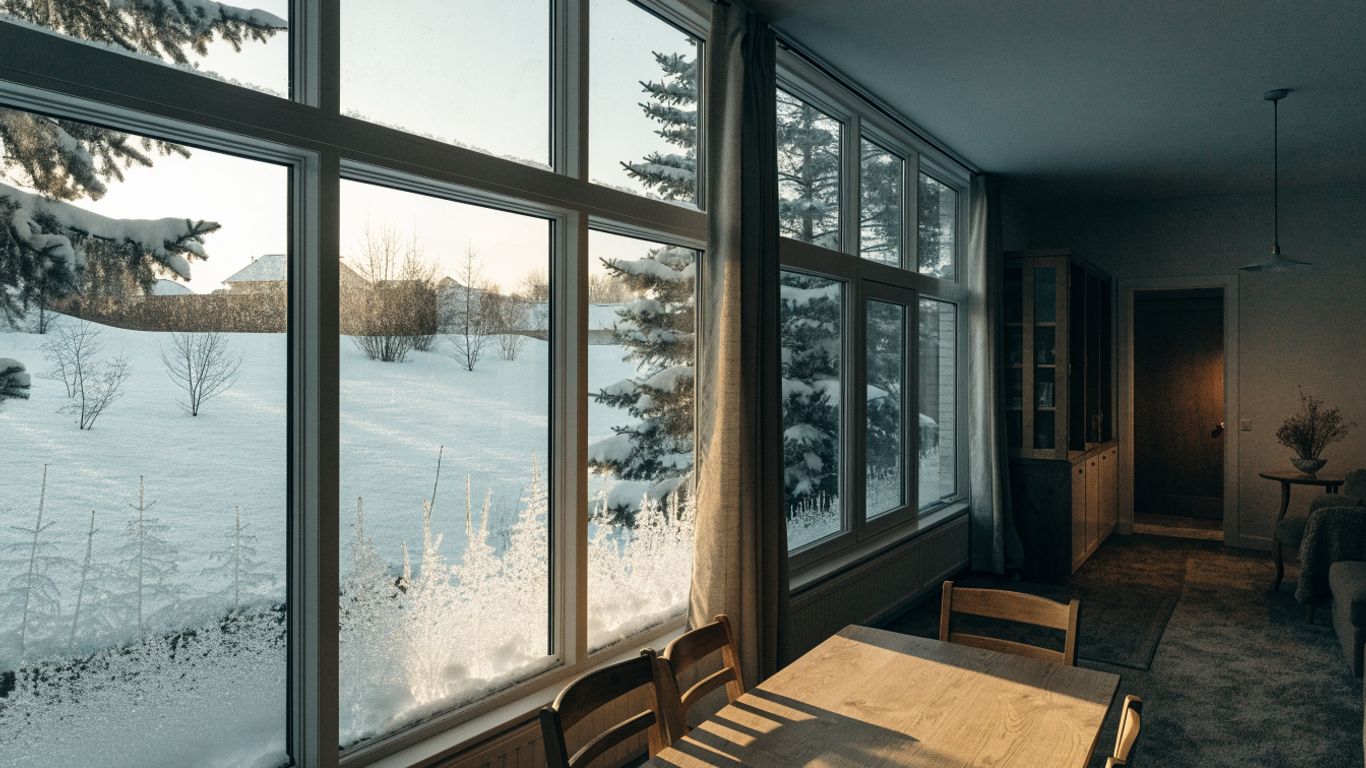
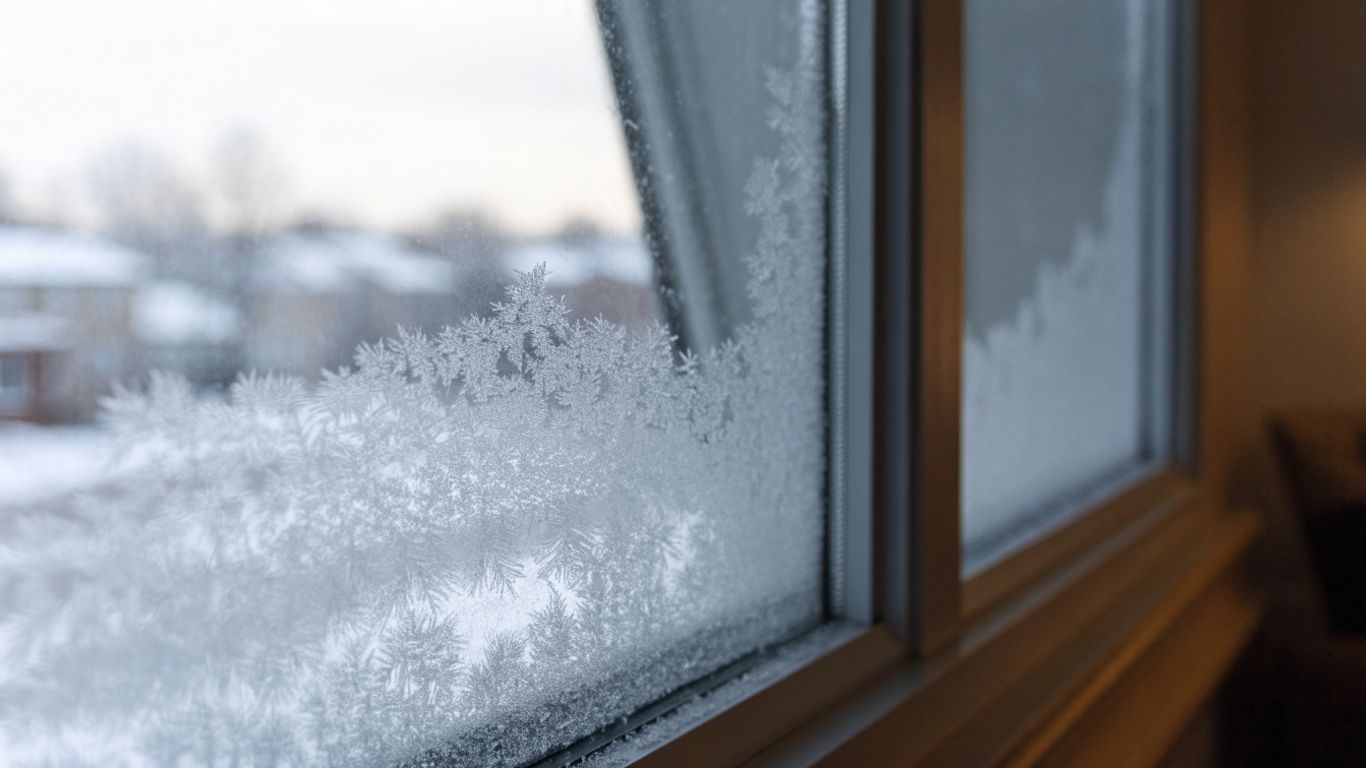
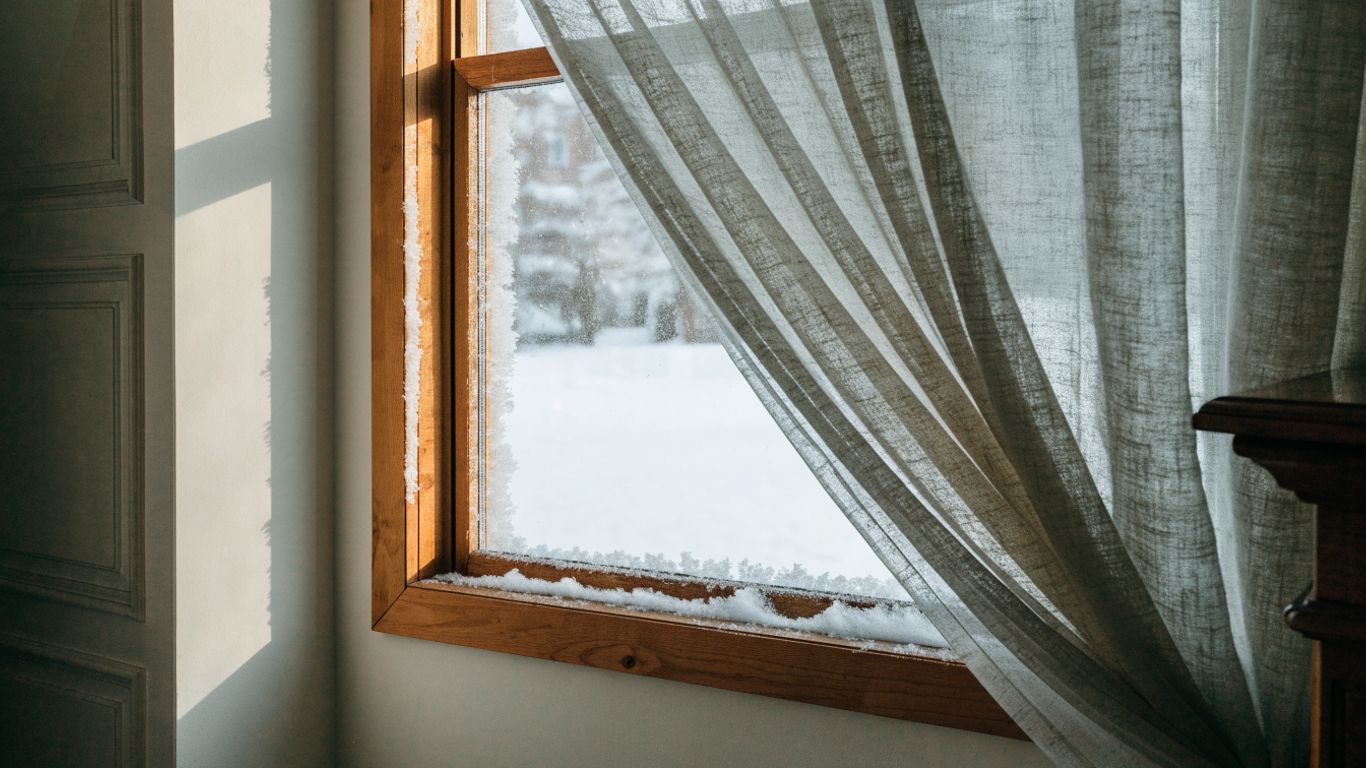
Every Ottawa homeowner knows the morning. The thermometer reads -25°C, and the inside of the bedroom window is covered in white crystals you can scrape with a fingernail. It looks alarming, and the first thought is usually that the window has failed. Sometimes it has. More often, frost on the inside of a window is the visible result of three things meeting at once: very cold glass, moist indoor air, and air that isn’t moving enough to carry that moisture away. Working out which of those is driving your frost is what separates a ten-minute fix from a window problem worth investigating, and it’s what this guide walks through, drawing on what our team sees in Ottawa and Gatineau homes every winter.
Key Takeaways
- Frost on a window’s room-facing surface usually means moist indoor air has met glass cold enough to freeze it. Where it appears, how often it returns, and whether you feel a draft can help you decide what to check next.
- Indoor humidity, cold weather, airflow, and window construction can all affect where frost appears.
- Frost on the room-facing glass differs from moisture or fog between sealed panes.
- An inexpensive hygrometer tells you more than guessing. The colder it is outside, the lower indoor humidity usually needs to be to keep the glass clear.
- Reducing moisture and improving air circulation may help limit recurring frost.
- Persistent frost, drafts, or damp window materials are reasons to investigate further.
Why Frost Forms on the Inside of Windows During an Ottawa Cold Snap
During an Ottawa cold snap, the outdoor temperature can pull heat from the glass until its room-facing surface becomes very cold. When warm, moisture-bearing air inside your home reaches that surface, water vapour condenses into droplets, the same interior condensation many homeowners notice on milder winter mornings. If the glass is cold enough, those droplets freeze into frost, and repeated cycles can build thicker ice on the inside of the window.
The timing can make the change feel sudden. A window that stayed clear through milder weather may frost overnight when the temperature drops, particularly if indoor humidity is high or air is not circulating well near the glass. This is one of the most common interior window frost causes: moisture in the air combined with a cold surface, not necessarily a single broken part.
A little frost during extreme cold does not by itself tell you that a window has failed. Look at its pattern and whether it clears as conditions change. Repeated heavy buildup, water running onto the sill, or frost accompanied by a noticeable draft gives you more reason to investigate.
Frost, Condensation, or Ice: What You’re Actually Seeing
The words frost, condensation, and ice are often used interchangeably, but the visible signs differ. Condensation usually appears as a wet film or separate droplets on the room-facing glass. Frost is frozen moisture, while thicker ice may form where water has collected and frozen repeatedly.

The location helps you narrow down what you are seeing. This quick comparison matters because moisture on the room-facing glass and fog trapped inside a sealed glass unit do not point to the same situation.
| What you see | Where it appears | What it may suggest |
|---|---|---|
| Droplets or a clear wet film | Room-facing glass | Moist indoor air meeting a cold surface |
| Fine white crystals | Room-facing glass | Condensation has frozen |
| Hazy moisture that will not wipe away | Between glass panes | A possible sealed-unit problem |
| A wet sill below the glass | Sill or frame | Water may be collecting or running down |
If you can safely reach the surface, note whether the moisture wipes away from inside. A haze that remains between the panes is different from frost you can touch, and that single test saves a lot of guessing.
The Humidity Connection: Why Tighter Ottawa Homes Frost More
Indoor air always contains some moisture, from breathing, cooking, bathing, and other everyday activities. When that moisture reaches a cold window, it can collect there, and as the glass temperature falls, the collected water may freeze. Lowering indoor moisture reduces the conditions that allow frost to form, although it cannot make very cold glass warm.
A tighter home holds onto heat, but it can also retain more indoor moisture when ventilation is limited. That does not mean a tight home is a problem. It means moisture sources, air movement, and ventilation matter, especially during a cold spell when the glass can cool substantially. It also means new windows are not an automatic cure for frost: better-sealed windows keep more humid air inside, so the humidity still has to be managed.
If the frost appears across several windows, consider the home’s general humidity and daily ventilation habits rather than assuming every window has failed. If it is limited to one area, local conditions such as a cold corner or restricted airflow may matter more.
How to Measure Indoor Humidity and What to Aim For
A basic digital hygrometer costs little and removes the guesswork. Place it in the room where frost forms, away from the bathroom and kitchen, and check it in the morning and evening for a few days. A single reading is a snapshot; the trend during a cold spell is what’s useful.
Guidance from Canada Mortgage and Housing Corporation (CMHC) on indoor air quality gives a comfort range of roughly 30 to 55 per cent relative humidity, but it also notes that humidity above about 35 per cent on the coldest winter days may cause some condensation on cold surfaces. In practice, that means the number that keeps your windows clear in a mild week is often too high during a deep freeze. If you run a humidifier, turn it down when a cold snap arrives, then adjust by watching the glass.
Treat the reading as a clue, not a verdict. Window construction matters too: an older or colder window may frost at a humidity level that a newer unit tolerates. If your readings are already low and the frost persists, the cause is more likely the window, an air leak, or blocked airflow than the humidity itself. If your home has a heat recovery ventilator, check that it is running and that its filters are clean, since it is designed to exchange stale, humid air with fresh outdoor air.
Everyday Habits That Add Moisture to Your Home in Winter
You can add moisture to indoor air without noticing it. Showers, simmering pots, boiling water, wet clothing, a humidifier left on a high setting, and several people spending more time indoors all contribute. In winter, windows become the most visible place where that moisture collects because the glass is colder than most interior surfaces.
Try to release moisture where it is produced instead of letting it spread through the home. Use a bathroom exhaust fan during and after showers, cover pots when practical, and make sure a clothes dryer vents outdoors. If laundry dries indoors, or many plants sit close together on a sill, those conditions may add to the moisture near a window.
You do not need to change every routine at once. Start with the habits that create the most moisture in your home and see whether the glass improves over several cold days. If the same pattern continues, check whether curtains, furniture, or stored items are limiting air circulation around the window.
Where Frost Shows Up First and What It Tells You
Frost often appears first at the bottom edge or corners of a pane, where the glass may be colder and air movement may be limited. The edges lose heat differently from the centre of the glass, and a sill or curtain can create a pocket where moist air lingers. A narrow band of frost is not the same clue as a whole pane covered in ice. Large glass areas, like the wide openings common in Ottawa townhouses, also give frost more surface to form on, so airflow along the full span matters as much as the glass itself.
Notice whether one window is affected or several. If frost shows up around multiple windows at once, indoor humidity or general cold-weather conditions may be involved. If it concentrates on a single window or one side of a room, consider local airflow, shading, nearby moisture, and the window’s condition before settling on a cause.
It helps to observe the pattern over time rather than judge it from one morning. Note the outdoor cold, whether the room was occupied overnight, and whether the frost disappears when the day warms. Those details make a later assessment more useful and help separate a temporary weather response from a recurring concern.
Quick Diagnosis: Match What You See to the Likely Cause
No single frost pattern diagnoses a window on its own, but this table gives you a sensible starting point before you decide what to do next.
| What you notice | What it may point to | Sensible next step |
|---|---|---|
| Frost across most windows in the house | Indoor humidity too high for the outdoor temperature | Check a hygrometer, run exhaust fans, lower the humidifier setting |
| Frost on one window only | A local cause such as blocked airflow, a cold corner, or a nearby moisture source | Clear the area around the glass and compare with neighbouring windows |
| Frost along the bottom edge or corners | A colder glass perimeter with limited air movement | Move curtains or furniture and watch whether the sill stays wet |
| Frost plus a draft you can feel | Air leakage around the sash or frame | Check weatherstripping and how the sash sits when closed |
| Haze or frost between panes that will not wipe off | A possible failed sealed unit | Photograph it over several days and check your warranty |
| Frost that leaves a wet, soft, or peeling sill | Repeated moisture reaching the frame | Dry the sill and arrange an assessment before damage spreads |
Not sure which row matches your window? Request a free assessment and tell us which windows frost, and on which mornings.
Why the Edge of the Glass Frosts First: Spacers, Glass Packages and Frame Materials
The edge of a window behaves differently from the centre of the glass. Spacers separate the panes in a sealed glass unit, while the frame and surrounding construction also influence how heat moves around the perimeter. In very cold weather, the edge can become cold enough for moisture to collect or freeze before the middle of the pane does.
Glass type matters as well. Coated glass such as Low-E glass packages is designed to reflect heat back into the room, which can keep the interior surface warmer than uncoated glass. Frame material plays a part too. Metal conducts heat readily, so older aluminum frames tend to run colder at the perimeter and are often where frost collects first in homes that still have original 1980s windows.
A visible edge pattern does not identify a specific defect by itself. Glass type, frame material, installation details, room humidity, and how air moves around the window all influence what you see. Technical expertise from our team, particularly Pete and Alex, is what turns those clues into a diagnosis, which is why comparing several windows and noting whether the frost is inside, outside, or between panes is more informative than relying on location alone.
Triple-Pane Glass and Frost: What It Can and Cannot Do
Triple-pane glass adds another pane and sealed space to a window assembly, which can keep the inner surface warmer and make frost less likely. It cannot prevent every instance of room-side frost. If indoor air is moist and the interior glass surface becomes cold enough, frost may still form, especially during severe cold or where air circulation is poor. Frost on a window does not, by itself, tell you what type of glass you have or whether the unit is defective.
Is Interior Window Frost Normal? When It Signals a Problem
Some interior frost can occur during very cold weather, particularly when indoor humidity is elevated. A brief episode that clears as conditions change is different from recurring buildup that leaves water on the frame or sill. The amount, location, and persistence are useful clues, but no single pattern is a diagnosis.
Pay attention to the material around the glass as well as the pane. Repeated moisture can leave paint peeling, wood damp, or finishes discoloured. Those changes are worth addressing because ongoing wetness can affect the sill and adjacent surfaces even when the original cause is simply cold glass and indoor moisture.
If frost keeps returning, compare the affected window with others and look for a draft, damaged weatherstripping, or an uneven fit. Dampness reaching the frame or the wall beside it is the point at which a cosmetic annoyance becomes a maintenance problem.
Frost Between the Panes: A Failed Seal
Frost or fog that appears between panes and cannot be wiped from either side may indicate that the seal of an insulated glass unit has failed. That is different from frost forming on the room-facing surface, where indoor humidity and cold glass are the immediate conditions. A persistent haze between panes can also vary with temperature, so note whether it remains when the weather changes.
Take dated photos on a cold morning and again on a milder day. Capitall Windows’ warranty covers insulated glass units against defects, so a failed seal on a window we installed is worth reporting early, with those photos and your installation date in hand.
Frost or Drafts? How to Tell if Air Leakage Is Part of the Problem
Frost and drafts can occur together, but one does not prove the other. Frost points to moisture freezing on a cold surface; a draft is moving air you may feel near the frame or sash. A cold area near a window can also come from the glass itself, so distinguish a chilly surface from air that is actually moving.
On a calm day, pay attention to the perimeter of the closed window and compare it with nearby walls. Look for visibly worn weatherstripping, gaps, or a sash that does not sit evenly. Avoid using an open flame to test for air movement; a safer approach is to watch a lightweight tissue or ask a qualified person to assess the area.
Gaps around the frame, missing insulation, or poor shimming can let cold air reach the glass edge and the wall beside it, which is exactly what air sealing, shimming and insulation around the frame are meant to prevent. If you suspect both frost and air leakage, record where you feel the movement and where the frost forms. Draft sealing addresses air movement, while moisture management addresses indoor humidity, and sometimes both need attention.
Does Window Frost Mean You’re Losing Heat?
A frosty window shows that the glass surface is cold enough for moisture to freeze, but it does not measure how much heat your home is losing. Heat moves through windows depending on the entire assembly and surrounding conditions, including the way large glass areas gain and lose heat depending on which way they face. Frost alone cannot tell you whether replacement is necessary.
Treat recurring frost as a reason to look at comfort and performance more broadly. Notice whether a room feels unusually cold, whether the window has a draft, and whether condensation or frost appears across many openings. Keep these observations separate: a moisture issue, an air leak, and an older or less insulating window are related possibilities, not interchangeable diagnoses.
If you want to assess the situation, start with the evidence you can observe: location, frequency, moisture on the sill, and changes in indoor humidity. A professional assessment can clarify which factors are contributing before you decide what work, if any, makes sense.
Frost on Patio Doors, Front Doors and Glass Inserts
Large glazed doors can frost for the same basic reason as windows: moist indoor air meets a cold surface. On sliding patio doors, the size of the glass, frequent use, and nearby traffic change how air moves around the pane. A door that opens often also brings in outdoor air, which can make the area feel colder without proving that the closed door is leaking.
Check whether moisture is limited to the glass or also appears around the frame and threshold. Frost on the pane suggests a cold surface and available indoor moisture; a draft around a closed door points toward a different question about fit or seals. Curtains or furniture close to the glass can reduce circulation and make local frost more noticeable.

Solid doors behave differently. With an insulated steel entry door, the foam core limits heat transfer through the slab, so frost is more likely to appear at a glass insert, the hardware, or the edges than across the door itself. If frost returns repeatedly, note when it occurs and whether it comes with damp trim or a persistent draft. Those details are more useful than the presence of frost alone.
Basement and Unheated Room Windows: Why They Frost Differently
Basement windows and windows in rooms kept cooler can frost more readily because their glass may be colder than the glass in a heated, frequently used room. Limited air circulation adds to the effect, especially if furniture or stored items sit close to the window. This is common with the single sliders found in finished basements, where the opening is small, low, and often partly blocked.
Basements also have their own moisture sources to consider, including damp materials or water entering around the foundation. Frost on a window does not prove that the foundation is wet, but repeated condensation alongside musty smells or damp surfaces is a reason to look at the room’s moisture conditions more broadly.
Keep the area around the glass open enough for air to move, and observe whether the window is affected even when the room is dry and ventilated. If the room is unheated, be cautious about comparing its window with one in a warm living space. The temperature and airflow are different, so the pattern will be too.
What You Can Do Tonight to Reduce Window Frost
A few practical changes can reduce the moisture available to freeze and help room air reach the glass. Start by clearing items that block airflow near the window, then check that your bathroom and kitchen fans work and vent outdoors. Wipe up standing water so it does not remain on the sill or frame.
Humidity, Exhaust Fans and Ventilation Habits
Try a short sequence of steps tonight and watch what changes over the next few cold mornings. Focus on moisture sources and airflow first rather than trying to warm the glass with a risky or improvised method.
- Run the bathroom exhaust fan during and after showers.
- Use the kitchen exhaust fan when cooking, if it vents outdoors.
- Turn the humidifier down during the coldest nights.
- Move curtains or objects that block airflow near the glass.
- Wipe up water on the sill and dry the surrounding surface.
Heavy drapes and blinds pulled tight against the glass can trap a cold pocket of air, so raise them during the coldest hours or leave a gap at the bottom so room air can circulate.
Just as important is what to avoid. Do not scrape frost with a knife or metal scraper, pour hot water on the glass, or aim a heat gun or hair dryer at it. Rapid temperature change can stress the glass, and metal can scratch it or damage the edge seals. Wiping thawed moisture with a dry cloth is the safer approach.
These steps work best when applied consistently. If the frost persists despite lower moisture and clearer airflow, the window’s condition, room temperature, or a draft may also deserve attention.
Do Window Insulation Film and Other Temporary Fixes Actually Work?
Interior window insulation kits, the clear shrink film applied with double-sided tape, add a still layer of air between the film and the glass. For a short stretch of winter they can reduce drafts and keep the room-side surface warmer, so they are a reasonable stopgap on a tight budget. Heavier drapes, draft stoppers at the sill, and fresh weatherstripping tape serve a similar purpose.
They also have limits. Film can trap moisture between itself and the glass, leave residue on trim and paint when removed, and make the window unusable for ventilation. More importantly, a temporary layer treats the symptom. If frost is caused by high humidity, the moisture source is still there, and if the cause is a failed sealed unit or a leaking frame, film will not repair it.
Use these fixes to get through a cold snap while you work out the real cause, not as a substitute for finding it. If you have already tried them and the frost, dampness, or draft keeps coming back, that tells you something useful about where the problem sits.
Tried the fixes and the frost keeps coming back? Book a free window assessment and we’ll check whether it’s humidity, air leakage, or the window itself.
When Frost Keeps Coming Back: Sill Damage and Replacement Signals
Recurring frost deserves attention when it leaves water on the sill or keeps the surrounding frame damp. Look for peeling paint, staining, soft or swollen material, and changes to nearby finishes. These signs do not reveal the original cause on their own, but they show that moisture is reaching surfaces that should stay dry.
Before considering replacement, distinguish room-side frost from moisture between panes and from air movement around the frame. Also consider whether indoor humidity or blocked airflow could explain the pattern. Addressing a source of excess moisture may help, while a persistent seal issue or damaged window may need a different response.
If you are unsure what is happening, document the frost and any changes to the sill, then arrange an assessment rather than relying on a single cold morning as proof. Recurring frost alone is not a universal replacement signal.
Your Options: Reseal, Replace the Glass Unit, or Replace the Window
When the window itself is the cause, the realistic options usually fall into three groups. Repairing weatherstripping or adjusting the sash suits a window that is structurally sound but leaking air. Replacing a failed sealed glass unit can make sense when the frame is in good condition and only the glass has failed. Replacing the whole window is usually the better path when the frame is damaged, the sill has moisture damage, or the same problems appear across many openings.
Be realistic about what replacement does. A new window can address cold edges, worn seals, and air leakage, but it will not remove frost caused by indoor humidity that stays too high, so the moisture still needs managing afterward. If several windows are failing, financing options can spread the cost of a full project where you qualify, and lead times and seasonal scheduling are worth understanding before you set a target date, since a winter install is possible but depends on the work and the weather.
What We See Most: Frost Calls in Ottawa and Gatineau Homes
After the first deep freeze each winter, the questions we hear from Ottawa and Gatineau homeowners are remarkably consistent. They want to know whether the frost is normal, whether there is a draft, and whether water is damaging the sill. Those are sensible questions, and the answer depends on where the frost forms and how persistent it is.
Three situations come up again and again. The first is a bedroom or nursery where a humidifier is running at full strength through the coldest nights, and the frost clears almost immediately once the setting is lowered. The second is an older window, often with a metal frame or an early vinyl unit, whose perimeter is simply cold enough to frost even when the humidity is reasonable. The third is a sealed-unit failure that homeowners assume is surface frost until they notice it will not wipe away. Technical expertise from our team, particularly Pete and Alex, along with years of Ottawa and Gatineau experience, is what lets us tell these apart quickly instead of treating every frosty pane the same way.
Because houses and daily routines differ, the same cold snap can produce different results from one home to another. A clear account of what you see, including when it begins, where it forms, and whether it wipes away, gives an assessment a far more useful starting point than a general description of “icy windows.”
What a Window Frost Assessment Actually Involves
A useful assessment starts with the conditions you can observe, not an assumption that every frosty pane needs replacing. We look at where the frost forms and how it behaves, take an indoor humidity reading, and check the glass edge, the frame, the weatherstripping, and how the sash sits when closed. We also look at the sill for moisture damage and at how the window was installed, since gaps, missing insulation, or poor shimming can quietly drive the problem.
It helps to arrive prepared. Note which windows are affected, take photos on a cold morning, and mention whether a humidifier runs, when the windows were installed, and whether you have felt a draft. That history lets our licensed installers, including Pete and Alex, separate a moisture issue from a window issue and tell you honestly whether you need an adjustment, a repair, or a replacement. Our Ottawa and Gatineau experience means we have usually seen the pattern you are describing before.
Get Your Frosting Windows Assessed by Capitall Windows
If you are dealing with recurring frost, a persistent draft, or a damp sill, an assessment is the quickest way to stop guessing. Tell us which windows are affected, where the frost appears, and whether the moisture wipes away from the room side. We will help you work out whether simple changes are enough or whether the windows need attention.
In the meantime, keep the sill dry, maintain reasonable airflow, and avoid covering the glass with anything unsafe. If the frost returns despite changes to moisture and ventilation, or if the surrounding materials stay wet, do not wait for spring.
Request your free window assessment or call 613-680-0492 to talk through what you’re seeing.
Conclusion
Frost on the inside of windows is the visible result of moisture meeting cold glass, but the pattern can have more than one contributing factor. By checking where it forms, measuring and managing everyday moisture, and watching for drafts or sill damage, you can decide whether simple changes are enough or whether a closer assessment is warranted.
Frequently Asked Questions
Why is there frost on the inside of my windows?
Indoor moisture can condense on cold glass and freeze when the surface temperature is low enough. Cold weather, humidity, and limited airflow can all contribute.
Is a little frost on a window normal during an Ottawa cold snap?
It can happen during very cold weather, especially when indoor humidity is high. Persistent or heavy frost, wet sills, and damaged finishes are reasons to investigate further.
How can I tell frost from condensation?
Condensation is liquid droplets or a wet film on the glass. Frost is frozen moisture, while thicker ice may result when collected water freezes repeatedly.
What does frost between window panes mean?
Moisture or haze that appears between panes and cannot be wiped from either side may indicate a failed seal in the insulated glass unit. It differs from frost on the room-facing surface.
Does window frost always mean there is a draft?
No. Frost means moisture has frozen on a cold surface; a draft is moving air. They can occur together, but frost alone does not prove air leakage.
What humidity level should I keep in winter?
CMHC guidance gives a general comfort range, but notes that humidity above about 35 per cent on the coldest days can cause condensation on cold surfaces. Use a hygrometer and lower the setting as the temperature drops, adjusting for how your own windows behave.
Will new windows stop the frost?
They can help if the cause is a cold edge, a worn seal, or air leakage. They will not remove frost caused by high indoor humidity, because better-sealed windows keep more humid air inside. Managing moisture still matters after replacement.
Can window frost damage my frame or walls?
Repeated frost that melts and leaves water on the sill can lead to peeling paint, damp or swollen material, and staining. Dry the sill regularly and have recurring dampness assessed before it spreads.
How can I reduce frost on my windows tonight?
Use exhaust fans when bathing or cooking, turn the humidifier down, clear items that block airflow near the glass, and wipe water from the sill. These steps may help reduce moisture and improve circulation.
Should I replace a window if frost keeps returning?
Not necessarily. First consider indoor humidity, airflow, drafts, the location of the frost, and any damage to surrounding materials. An assessment can help identify the likely cause before you decide what to do.